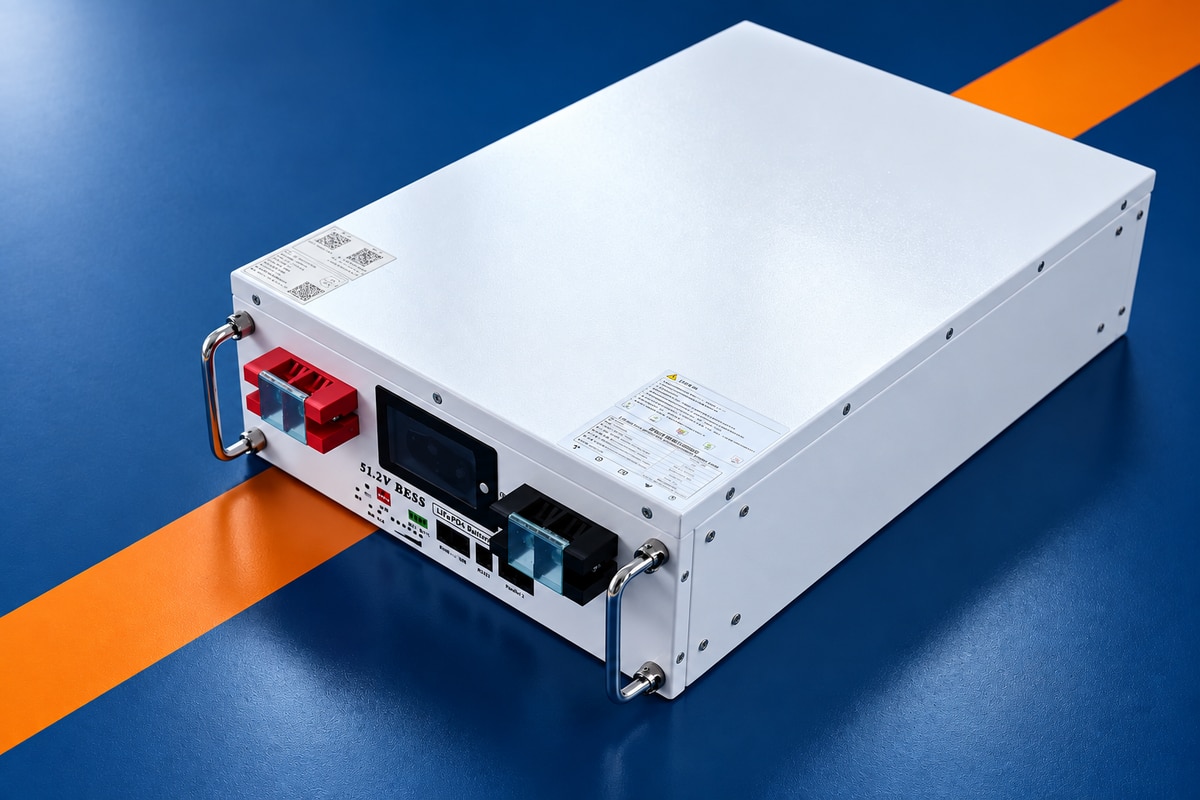
Solar inverters and battery storage work together as part of a wider energy system. Reviewing the equipment, installation conditions and operating needs early helps create a clearer project direction.
From solar generation to stored energy
Solar generation is available according to sunlight conditions, while the site’s energy needs continue across different operating periods. Battery storage provides a way to plan around that difference. Whether the project involves residential backup, a small commercial site or an off-grid application, the system should be discussed as a complete arrangement rather than as separate products.
The installed relationship matters
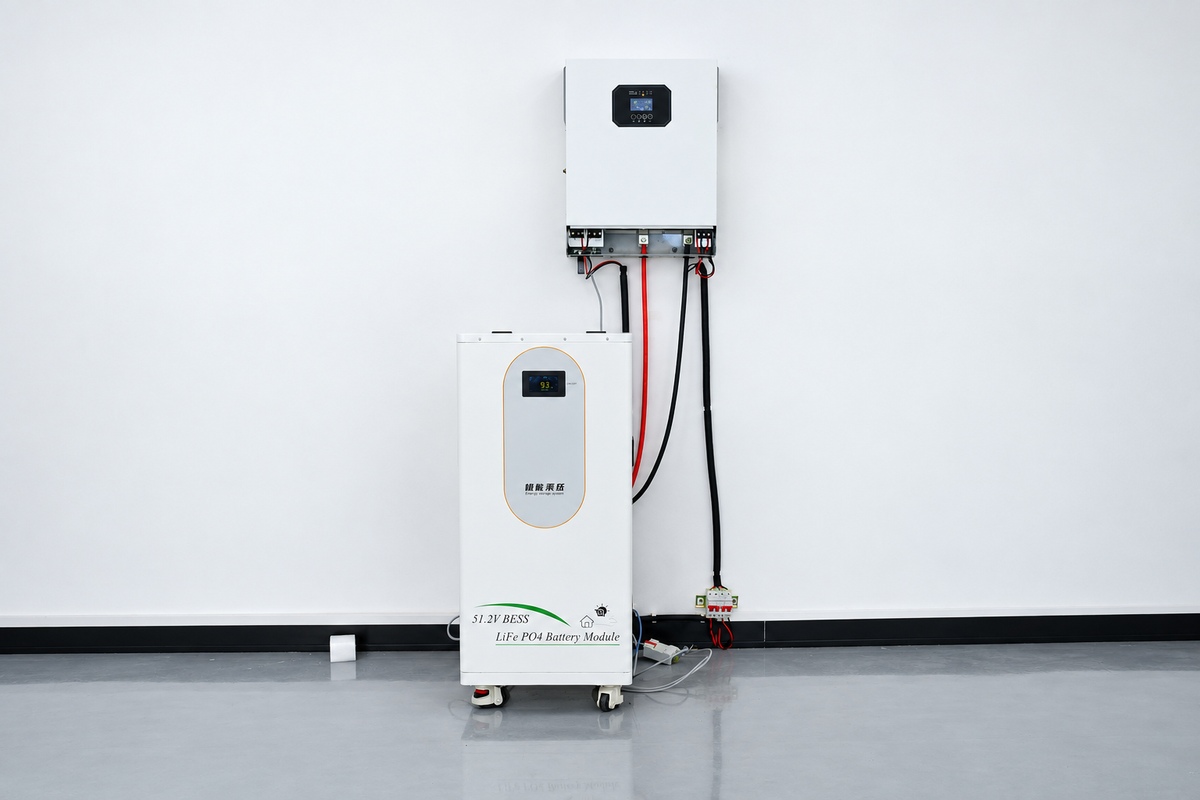
The image shows a floor-standing LiFePO4 battery connected with a wall-mounted inverter. The battery, inverter, cables and protection components need to be considered together during project planning. Equipment placement, access for installation and the route of the connections can all affect the final arrangement.
Compatibility should be reviewed early
Before confirming a configuration, project partners can share the inverter model, system voltage, solar array information and intended operating mode. These details help identify which products need to work together and which installation conditions should be checked. Early compatibility discussions can also reduce unnecessary changes later in the enquiry process.
Different sites need different priorities
Residential projects may focus on backup power and available wall or floor space. Commercial applications may need the system to fit around working hours, existing equipment and site access. Off-grid facilities may require closer attention to local conditions and the relationship between generation, storage and the connected loads.
Building a clearer project conversation
Qicheng Energy offers LiFePO4 batteries, solar inverters and inverter charger products for residential, commercial and off-grid applications. A useful discussion begins with the site and the application, then moves toward product format, compatibility and the practical requirements for installation.
The next step is a focused review
Customers and project partners can begin by sharing a short description of the site, the intended use and the equipment already available. The information can then be used to discuss a suitable system direction without committing to a configuration before the important details are reviewed.
Review Your System Requirements