Rack-mounted LiFePO4 batteries give project teams a clear way to plan energy storage around available space, connected loads and the operating needs of the site.
Choosing a battery format that fits the site
Energy storage projects rarely have identical installation conditions. A compact rack-mounted battery can be considered when equipment needs to be organized in a structured cabinet or rack area. Other projects may be better suited to a floor-standing or wall-mounted format. The first step is to understand where the equipment will be placed, how it will be accessed and what other system components will be installed nearby.
Look beyond capacity alone
Capacity is an important part of a battery selection, but it is not the only consideration. The expected loads, operating hours, backup priorities, inverter connection and available installation space all influence the configuration. Reviewing these details together creates a more useful basis for comparing battery options than looking at a single number.
Product details that support the discussion
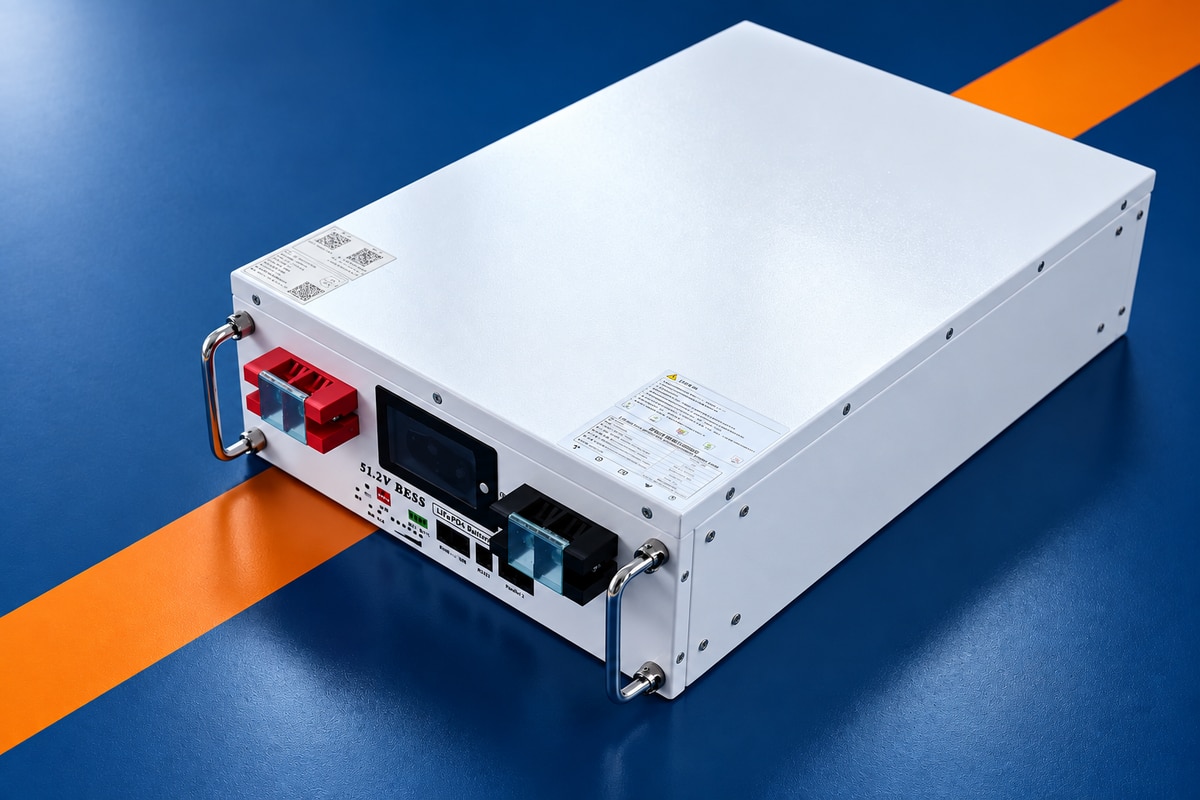
The rack-mounted LiFePO4 battery shown in this article is presented with its front panel, terminals and enclosure visible. These details help project partners understand the product format before discussing a complete system. Clear product images are also useful when customers need to compare rack-mounted equipment with floor-standing or wall-mounted alternatives.
A product direction for different applications
Qicheng Energy supplies LiFePO4 battery products for residential, commercial and industrial applications. The same planning approach can be used for backup power, solar energy storage and off-grid projects: identify the application, review the installation conditions and then discuss the product configuration that matches the project.
Start with the information available
An initial enquiry does not need to contain every technical detail. Application type, intended use, connected loads, preferred installation format and existing inverter information are a practical starting point. With these details, the next conversation can focus on product compatibility and the steps needed to move the project forward.
Discuss Your Battery Requirements